

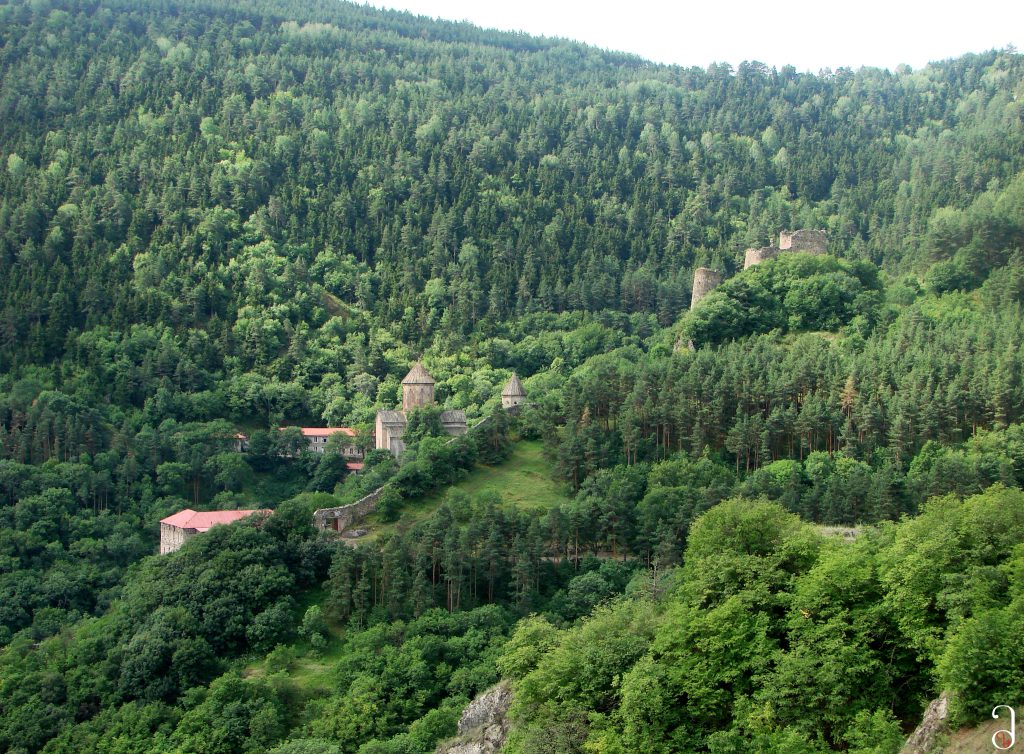
Saphara Monastery
Sapara Monastery Georgia: A Hidden Sanctuary
Sapara Monastery Georgia is a stunning architectural complex hidden in the forested mountains of the Samtskhe region. This religious site has existed since at least the 9th century. Over the hundreds of years of its existence, many important figures in Georgian ecclesiastical history lived here as monks. Because of its secluded location, the monastery offers a peaceful atmosphere that captivates every visitor.
The Legacy of the Jakeli Family
At the end of the 13th century, Sapara Monastery Georgia became a possession of the powerful Jakeli family. The leader of this family, Sargis Jakeli, maintained excellent relations with the Mongols. Consequently, the Samtskhe region enjoyed a rare period of peace.
When Sargis grew old, he took monastic orders and changed his name to Saba. His son, Beka, later built the largest of the 12 churches at the site. He named it St. Saba’s Church to honor the saintly name his father had adopted. This building remains one of the most architecturally important churches of its era.
Art and Survival at Sapara Monastery Georgia
The interior of St. Saba’s Church features 14th-century frescoes of exceptionally high quality. These paintings showcase the artistic mastery of medieval Georgia. Furthermore, the complex survived many difficult periods. From the late 16th century until the early 17th century, the expansion of the Ottoman Empire forced the monks to leave.
During this time, the monastery became empty. In addition, priests moved the monastery's icons and treasures to more protected areas of Georgia to keep them safe. Today, the monastery is active again. It serves as a vital spiritual center and a popular destination for tourists who love history and art.
Planning Your Visit
The road to Sapara Monastery Georgia winds through beautiful rocky landscapes. Visitors can explore the ruins of the fortress and the smaller chapels surrounding the main church. Moreover, the site provides a unique look into how Georgian nobles lived and prayed during the Middle Ages. Whether you are a history buff or a casual traveler, Sapara is a must-visit location in southern Georgia.