

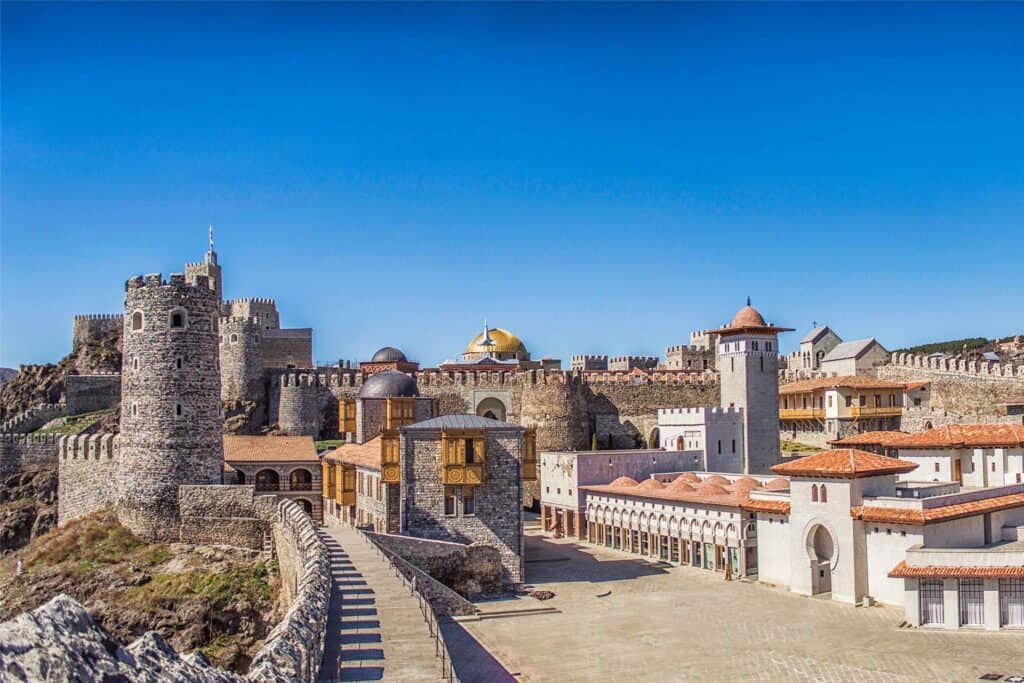
Rabati Castle
Rabati Castle Georgia: A Multicultural Fortress
If you are exploring the Samtskhe-Javakheti region, Rabati Castle Georgia is a destination that showcases centuries of diverse history. This massive complex sits in the town of Akhaltsikhe, specifically in the historical "Rabat" district. Perched on the banks of the Potskhovi River, the castle once served as the most important defensive structure in southern Georgia. Consequently, the fortress featured three protective fences and a secret network of underground tunnels to withstand long sieges.
The Ancient Origins of Lomis Castle
The history of Rabati Castle Georgia began as early as the 9th century. Originally, locals knew it as Lomis Castle. During the 13th and 14th centuries, the powerful Jakeli family turned the fortress into their primary residence. They expanded and restored the site extensively. In addition, this period of growth gave the town its modern name, "Akhaltsikhe," which translates to "new castle" in the Georgian language.
Centuries of Conflict and Transformation
Throughout the 16th century, the fortress passed under the rule of the Ottoman Empire. This transition brought new architectural styles to the complex, including the mosque and madrasa. Later, in the 19th century, the Ottomans gave up the fortress following the Treaty of Adrianople. While the site has survived many wars, most of the buildings you see today date back to the 17th and 18th centuries.
Modern Restoration and Tourism
In 2011 and 2012, the Georgian government carefully rebuilt and renovated Rabati Castle Georgia. This project restored the mosque, the church, and the castle towers to their former glory. Furthermore, the site now includes a museum, a hotel, and beautiful gardens.
Today, Rabati Castle Georgia serves as a popular destination for international tourism. Visitors can walk along the high stone walls and enjoy panoramic views of the surrounding mountains. Whether you are interested in medieval warfare or beautiful architecture, this fortress provides a unique look into Georgia's multicultural past.