

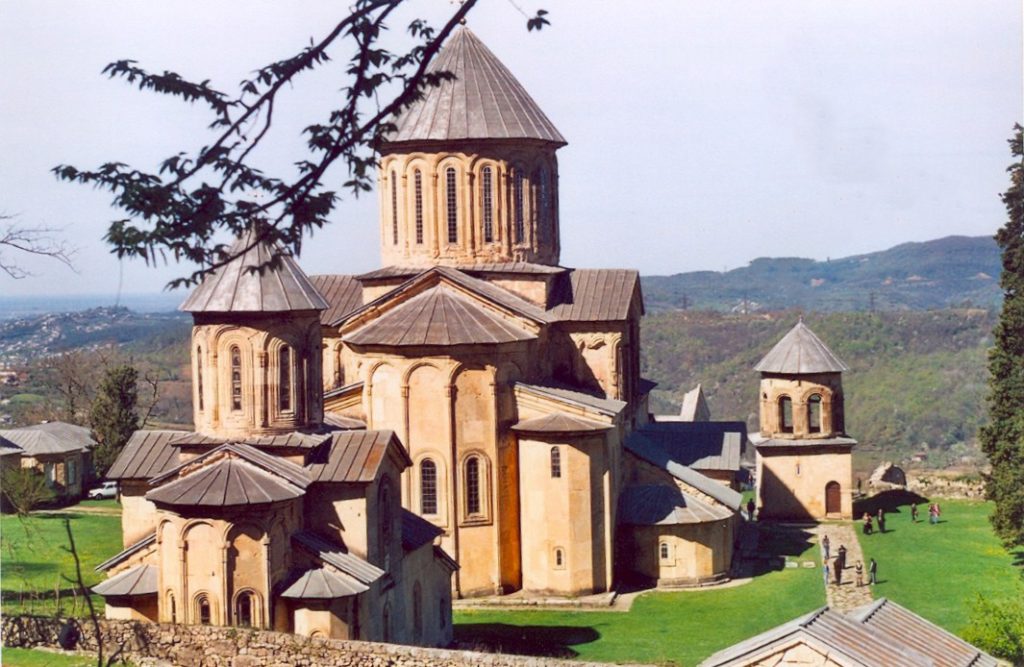
Gelati Monastery (UNESCO)
Gelati Monastery Georgia: A UNESCO Masterpiece
The Gelati Monastery Georgia stands as a magnificent symbol of the country's "Golden Age." King David IV, known as David the Builder, founded the monastery in 1106. Because of its cultural and historical importance, UNESCO added it to the World Heritage list in 1994. The site sits on top of a grassy hill. From this height, it overlooks the old capital city of Kutaisi and the beautiful Tskaltsitela River valley.
A Center for Science and Faith
Historically, Gelati Monastery Georgia served as much more than a religious site. It functioned as one of the main cultural and intellectual centers in the region. The King established an Academy within the walls. This institution employed some of the most celebrated Georgian scientists, theologians, and philosophers.
Furthermore, the architecture reflects a deep spiritual purpose. The builders designed the complex to feel close to God. The surrounding forest perfectly complements the stone structures. Consequently, the monastery creates a peaceful atmosphere that balances the grand exterior with the quiet hills of the Imereti region.
The Tomb of King David and Royal Treasures
One of the most significant features of Gelati Monastery Georgia is its royal connection. The site serves as the final burial place for its founder, King David IV. Near the King’s grave, visitors can see the famous gates of Ganja. King Demetrius I, David’s son, took these gates as a trophy in 1138.
Additionally, the monastery has preserved a vast collection of murals and manuscripts. These treasures date back to the 12th through the 17th centuries. The vibrant mosaics and frescoes inside the main cathedral remain some of the best-preserved examples of medieval art in the Caucasus.
Why You Should Visit Today
The complex remains a functioning church and a stable, living monument. All the original parts of the monastery are still intact. In addition, the local community continues to care for the buildings and the sacred art within them.
Tourists from all over the world come to see this masterpiece. Whether you are interested in ancient history or religious art, Gelati Monastery Georgia offers a deep look into the soul of the nation. It is a vital stop for anyone visiting western Georgia or the city of Kutaisi.