

Borjomi
Borjomi Georgia: The Pearl of the Caucasus
If you are looking for a perfect mix of nature and wellness, Borjomi Georgia is the ideal destination. This famous resort town sits in the Samtskhe-Javakheti region in south-central Georgia. It rests within the picturesque Borjomi Gorge on the eastern edge of the Borjomi-Kharagauli National Park. Today, the town is world-renowned for its mineral water industry. In addition, it remains a top choice for travelers seeking the healing powers of natural springs.
The Historic Architecture and Heritage
The town's history is as rich as its waters. During the Middle Ages, Borjomi Georgia served as a strategic crossroad in the Tori province. Three massive forts—Gogia, Petra, and Sali—still overlook the town from the nearby hills. Later, during the 19th century, the area became a favorite summer retreat for the Russian aristocracy.
Furthermore, Grand Duke Nikolay Mikhailovich built a stunning chateau and park at Likani in the 1890s. While the Soviet era saw these aristocratic mansions become sanatoria for the elite, the town never lost its charm. Despite a major flood in 1968, the region continued to thrive as a hub for health tourism.
Nature and Mineral Springs in Borjomi Georgia
One of the main reasons people visit Borjomi Georgia is its incredible water. The mineral water industry is the country’s number one export. Consequently, the town has grown into a major economic center. Visitors can drink the naturally carbonated water straight from the spring in the local Central Park.
Moreover, the area hosts the most extensive ecologically-themed amusement park in the Caucasus. This makes it an excellent spot for families. If you prefer wild nature, the nearby Borjomi-Kharagauli National Park offers vast hiking trails. The World Wide Fund for Nature (WWF) supports this park, ensuring its diverse flora and fauna remain protected for future generations.
Modern Tourism and Wellness
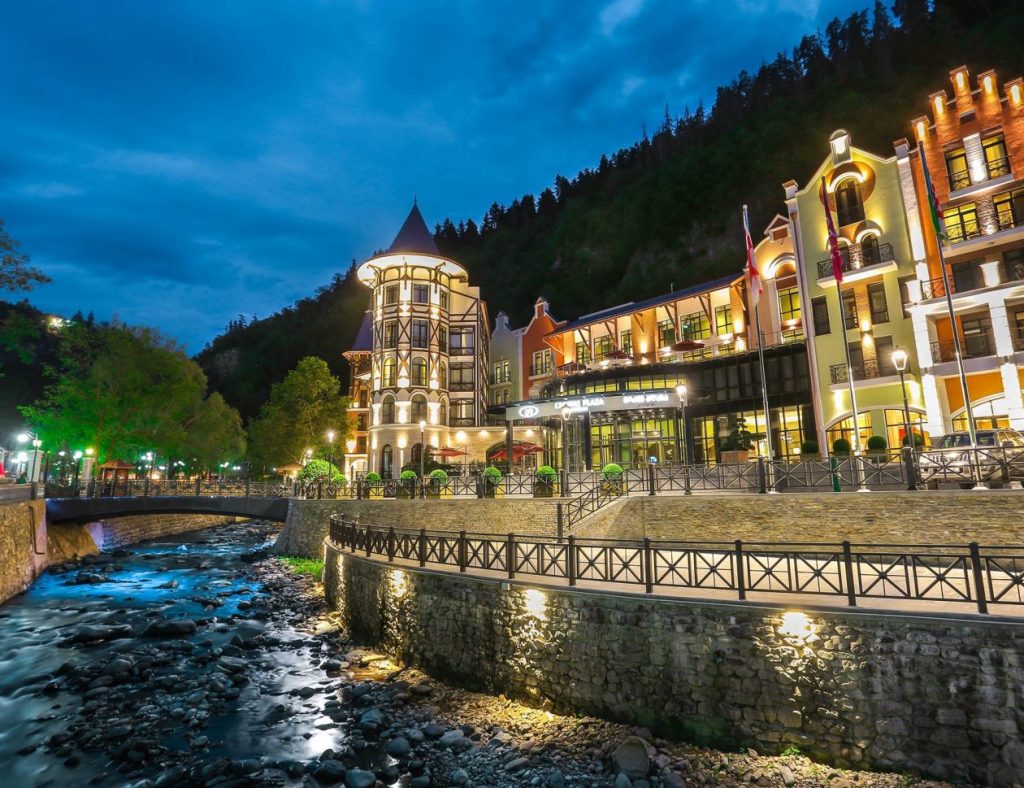
Currently, Borjomi Georgia stands as a vital center for health and eco-tourism. Recent government and private investments have modernized the municipal infrastructure. As a result, new luxury hotels and cozy guesthouses now welcome visitors from around the world. Whether you want to explore ancient forts or relax in a sulfur bath, this town offers a unique experience in the heart of the mountains.