

Vardzia
Vardzia Cave City Georgia: A Royal Masterpiece
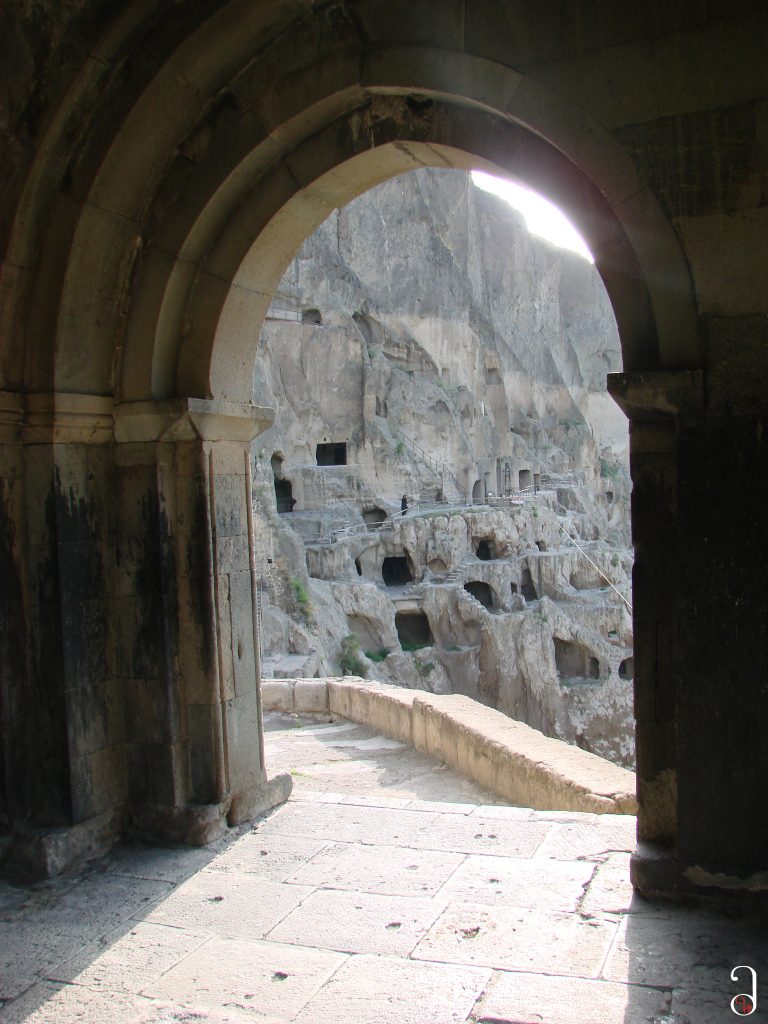
Vardzia Cave City Georgia is a magnificent monastery complex carved into the slopes of the Erusheti Mountain. This historic site sits on the left bank of the Mtkvari River, just 30 km from Aspindza. Workers began the main construction during the late 12th century. Today, the caves stretch along the cliff for five hundred meters and rise up to nineteen tiers.
This location represents the "Golden Age" of Georgian history. The Church of the Dormition, built in the 1180s, remains the heart of the complex. It features a famous series of wall paintings from the reign of Queen Tamar and King Giorgi III.
The History of Vardzia Cave City Georgia
Excavations show that people inhabited this area as early as the Bronze Age. Furthermore, the site underwent four distinct building phases. First, King Giorgi III laid out the site and excavated the initial dwellings. Second, his successor, Queen Tamar, oversaw the decoration of the main church.
Later, a third phase added sophisticated defenses, a water supply, and an irrigation network. Consequently, the city became a powerful stronghold. However, a massive earthquake in 1283 caused heavy damage. This led to a fourth phase involving partial rebuilding to restore the monastic life.
Exploring the Caves and Wine Cellars
The city is divided into eastern and western sections. In the eastern part of Vardzia Cave City Georgia, you will find 79 separate dwellings across eight tiers. This area contains a total of 242 rooms. These include "Tamar's Room," a pharmacy, and 25 wine cellars. Interestingly, archaeologists found 185 wine jars sunk into the floors. This proves that viticulture was vital to the monastic economy.
The western part contains an additional 40 houses and 165 rooms. Here, you can explore a refectory with a large bakery and a forge. Beyond the bell tower, the complex rises even higher. Steps lead visitors up to 19 tiers, eventually reaching an ancient cemetery.
Planning Your Visit to Vardzia
Modern infrastructure makes it easy to explore this giant complex. Visitors use access tunnels and internal stairs to move between the levels. Moreover, the site remains a popular destination for international tourism and spiritual pilgrimage. Whether you love medieval art or engineering wonders, Vardzia Cave City Georgia offers a unique glimpse into the past.